After the Wisconsin primary election in April, I had the opportunity to talk with Cedar Hayes, the campaign organizer for Planned Parenthood Advocates of Wisconsin in Green Bay. While talking to her, I was able to get some insight on her job and what she does, along with advice on what people can do to help support Planned Parenthood.
To get involved and to find out what Planned Parenthood is doing, check out the following links! Events page HERE. To get involved in the Action Council, visit this website. To sign the petition, enter your information HERE! And a huge thanks to Cedar for taking the time to chat with me and sharing about Planned Parenthood.
Feminism has been viewed as having four waves, each wave having a slightly different goal/fight. The first wave began towards the end of the nineteenth century. The focus of the true first wave was to gain women more opportunities, specifically suffrage; women wanted to gain the right to vote.
The second wave happened in the 1960’s to 1990’s. During this time, feminists channeled their efforts to sexuality and reproductive rights, along with passing the Equal Rights Amendment. Intersectionality became a stronger part of the feminist movement during this time. As defined by Merriam-Webster, intersectionality is “the complex, cumulative way in which the effects of multiple forms of discrimination (such as racism, sexism, and classism) combine, overlap, or intersect especially in the experiences of marginalized individuals or groups.” Essentially, it is the idea that all parts of one’s identity (things like race, class, religion, gender, sexual orientation, ability, etc.) all work together in terms of oppression. It’s not possible to look at how a person is treated through one of these lenses because they are all intertwined.
Beginning in the mid 1990’s, third wave feminism took over. This wave is when we start to see the most similarities between what feminism looks like today. The third wave was a bit different; feminists focused a lot on individual empowerment, “taking back” terms, and rethinking things like “universal womanhood.” A lot of feminists in the third wave didn’t actually use the term “feminist” to describe themselves. This was a time of change and breaking boundaries.
Currently, we are living in the fourth wave of feminism. Today, feminists are diving into issues like body image, rape, violence, unequal pay, along with other things. Conversations about these topics are becoming more normalized and common. Fourth wavers are working to break through heteronormativity and the binary, trying to get to a place of inclusion. Feminism isn’t just about women anymore, which is a large reason why some feminists are moving away from the term.
Today, we have some incredible improvements. Don’t get me wrong, there is still an incredibly long way to go in terms of feminism, equal rights, inclusion of all people, etc. But thankfully, we are seeing more people from minorities in leadership positions, there are more educational opportunities in the field of women and gender studies, more organizations and movements are active today, better acceptance of people outside the traditonal binary and heterosexual norm, among other things. All of these things are steps in the right direction.
As if living through a global pandemic wasn’t horrible and stressful enough, now women are also unsure if they will have access to necessary medical services, like abortions. Due to the coronavirus, there has been a push for shutting down or limiting access to clinics that offer abortions. Although it’s crucial that steps are taken to limit the spread of the virus, it’s also incredibly important that women are able to continue receiving essential healthcare. Since people are hunkering down and staying home, it’s safe to assume that people have become sexually active. However, this does not necessarily mean that all acts are happening safely. Now, more than ever, women need to have the ability to access abortions. Unfortunately, some are trying to take it away though, saying it will help in preserving hospital PPE (personal protective equipment) resources.
In Texas, there is an order in place that bans all procedures that are not considered “immediately medically necessary.” The only ones that are able to be done have to be causing a threat to the life or health of the patient. This was a decision by the 5th Circuit Court of Appeals that reversed the lower court’s decision.
Although it may seem that taking this action is beneficial in fighting COVID-19, it is not likely to make much difference. Most times, abortions don’t take place in hospitals and they don’t actually require much in terms of PPE that is needed for those fighting the coronavirus.
This is a great article that explains what happened in Texas with this case: The Texas Tribune.
Unfortunately, other states like Ohio, Oklahoma, and Alabama have taken similar measures. All around, women’s rights are being taken away and suppressed. Now is a great time to advocate and make your voice heard about this issue! Wondering how to help? Click HERE! Want to receive information about Planned Parenthood and what they do? Fill out this form. As always, simply help advocate and promote a positive image for Planned Parenthood and reproductive rights as a whole. In the meantime, check out the virtual events Planned Parenthood is hosting!
In the end, this is taking away a woman’s right to terminate a pregnancy. That is a right that should never be taken away, especially not during times like these. This is a fight that has been going on for so many years, but this is a time of a lot of possible change, so it’s crucial you get involved!
And of course, don’t forget: it’s always important to practice safe sex. Remember to protect yourself, don’t count on your partner for providing protection. For a few tips on practicing safe sex, check out this short video. Now go, stock up on protection, and have some (safe) fun!
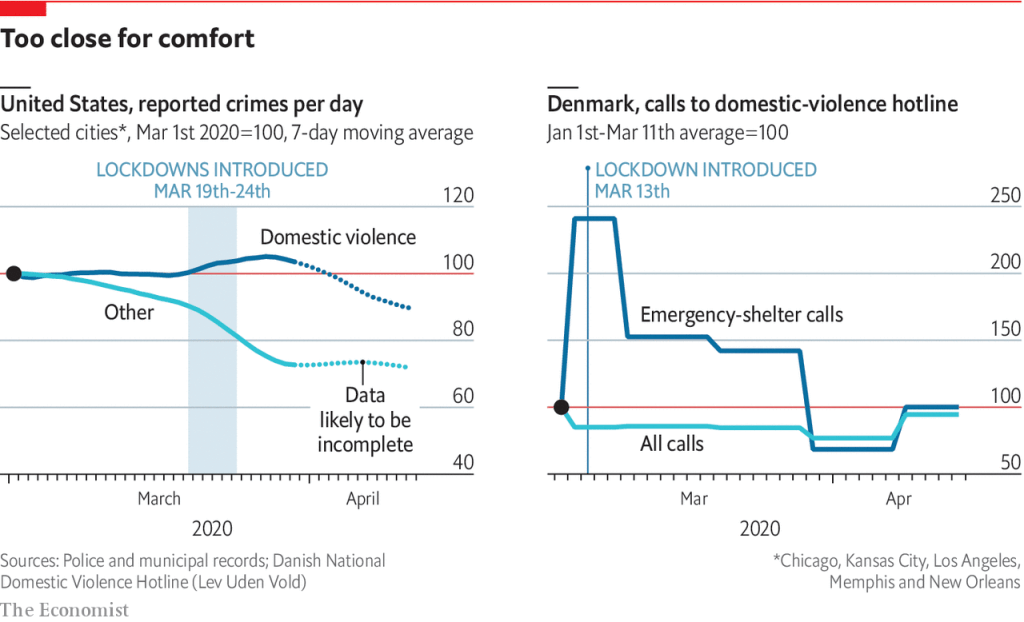
During the Coronavirus pandemic of 2020, citizens are being told that they are safer at home. Unfortunately though, that’s not the case for everyone. While citizens have been quarantined at home, there’s been a rise in the cases of domestic abuse. That’s right, people are being told to stay at home to stay safe, but this is in turn causing people to not be able to get away from their abusers. Help lines have seen a major increase in the calls coming in, more and more people reporting abuse due to being on lockdown in their homes.
Domestic abuse isn’t sexist; it can happen to anyone. However, the most abuse is mostly happening to women and children who are basically trapped at home with a male partner. This isn’t happening only in the United States, it’s happening all over the world where lockdowns have been put into place.
If you or anyone you know is unsafe, there are resources available:
National Domestic Violence Hotline
Call or text: 1-800-799-SAFE (7233)
Contact information for many domestic violence helplines
Some countries and places are also creating emergency shelters for women in vacant hotels. In some places, existing shelters are unable to be utilized due to the possibility of spreading the virus, so other options are being explored. This is varying place to place, so check locally for shelters and programs available.
This is an incredibly odd and scary time we are all living in. Now, more than ever, we need some help getting through each day. Everyone could benefit greatly from talking to a counselor. Thankfully, many offices are offering telehealth video or phone therapy sessions. Now is a great time to make the call and schedule an appointment! Check with your insurance too, they might cover the service for you. Mental health is just as important as physical, don’t be afraid to take steps in bettering yourself.
What’s your experience with feminism? What is feminism to you? Would you consider yourself a feminist? These are all questions I asked my friend Thomas on my couch one afternoon. I was truly curious to hear what he had to say, I wanted to get a male’s perspective on feminism and reproductive rights. Going into the “interview,” I didn’t expect Thomas to consider himself a feminist. And honestly, after we talked, he probably still doesn’t and could even be more confused as to what feminism is. However, even if Thomas wouldn’t label himself as a feminist, he does actually have a few opinions that would line up with a one.
My friend Thomas was raised from age 3-18 by a single mom; she worked 3 jobs to be able to provide for him and his younger brother. (Yes, she’s a badass.) When Thomas talked about his mom, you can tell that he really cares about his mom and thinks that she’s pretty great. Something that came up over and over again was that his mom made sure he and his brother knew how to treat women. In general, he was raised in a way that stressed treating people equally. However, Thomas doesn’t think that his mom would consider herself a feminist.
I got a kick out of Thomas when we were talking about feminism because he kept saying that he didn’t have any knowledge of feminism. And really, I don’t think it’s that he doesn’t have knowledge about it, I think it’s more so misknowledge. This is likely the situation for a lot of people and possibly due to the fact that gender study classes aren’t generally taught in high school and aren’t really required in college. For a quick look at what feminism is, check out this story: Feminism For Dummies. As for people not wanting to identify with the term “feminist,” this article does a great job of discussing the issue.
Throughout our discussion, Thomas kept applying feminism and coming back to the workplace as the main way to discuss his views on feminism. For him, this is the area that he has the most experience in and is the easiest topic for him to talk about in terms of feminism. Overall, Thomas is incredibly career and work driven, so he sees the workplace as a place that should be focused on work ethic, not gender. He strongly believes that everyone needs to work hard and earn their own way, not get ahead or be handed anything due to their gender.
When I asked Thomas about reproductive rights, he was incredibly open minded. He is a strong believer that women should be able to do what they want with their bodies. He thinks that decisions about keeping a baby should be a collaborative decision, but essentially the woman’s decision. In terms of birth control, he strongly believes that it should be free and on both parties to have. Ideally, he would like a world where men can get a vasectomy when they are young and then be able to reverse it once they are actually ready to have kids. (As a woman, I’d love to have women not start their menstrual cycle until they’re ready to have kids.) Unfortunately, nature trumps and we can’t have all of our wishes granted.
Overall, this conversation opened up my eyes a lot and really made me realize that we need more education on gender issues. It seems that there are a lot of misconceptions about feminism and education could help to open up people’s eyes to what feminism really is.
When thinking of creating an image for myself and the type of material I want to promote, I wanted to catch people’s attention and incorporate “feminism/feminist” in some sort of way. With that, “The Real F Word” was born.
My name is Ashley and I am the sole provider for “The Real F Word.” I am beginning my journey of journalism, specifically with Women’s and Gender Issues. For this blog, I will be focusing mostly on reproductive rights and the interworking parts of that topic.
I am hoping to develop intriguing posts with a lot of great facts and insights that can be helpful to others trying to look into this topic. I would love to conduct a few interviews, talking to experts in this field, gaining knowledge from them.
I look forward to creating content, making connections, and getting feedback through this platform!
 The Real F Word